
September 15, 2026
From the Aegean to the Ionian: A sea of knowledge
April 5, 2024
Metapolitefsi 1974-1989
July 15, 2024
The project “Development of a Virtual Reality and Artificial Intelligence Platform for Simulating Job Interviews for Children with Developmental Disorders” was implemented in 2024 in collaboration with the University of West Attica.
The platform combines Virtual Reality (VR) and Artificial Intelligence (AI) technologies to create realistic job interview simulations for young people with developmental disorders. Within a safe and controlled digital environment, users can practice real-world professional communication scenarios, developing the social and communication skills necessary for successful integration into the labor market.
The project also serves as a research pilot for evaluating state-of-the-art AI and VR technologies, exploring how digital assistants, natural language processing, and immersive virtual environments can support educational and therapeutic interventions.
The platform leverages advanced AI models to generate dynamic and personalized interview experiences tailored to each user's needs. Educators and therapists can define specific instructions and configure scenarios with varying levels of difficulty, topics, and communication styles, while the system considers the user’s cognitive and communication profile.
At the same time, the platform provides a safe and supportive training environment that fosters confidence, adapts to individual learning pace, and supports the gradual development of social and communication skills.
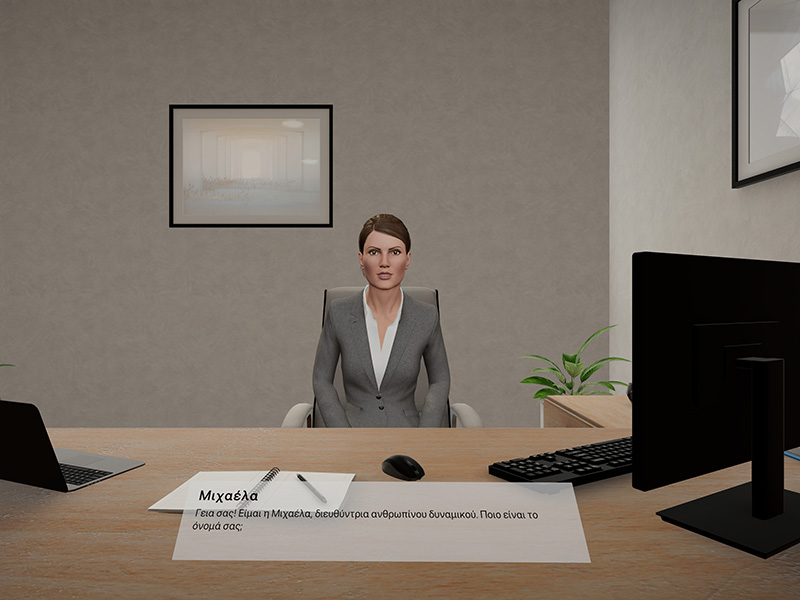
At the heart of the experience is a human-like interviewer avatar. The platform includes multiple interviewer characters, both male and female, featuring realistic body movements, facial expressions, and synchronized speech.
Using advanced animation systems and lip-sync technologies, the avatars achieve a natural presence that enhances user engagement and creates a more immersive and interactive experience.
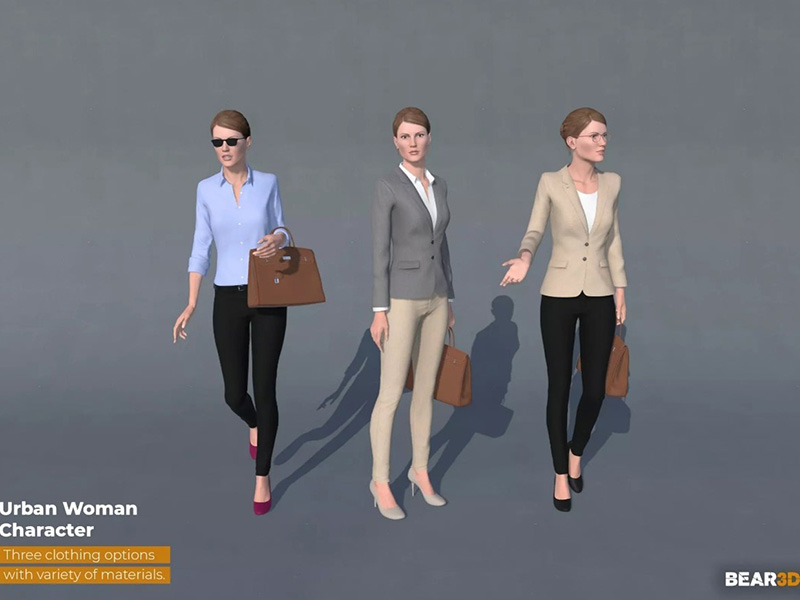
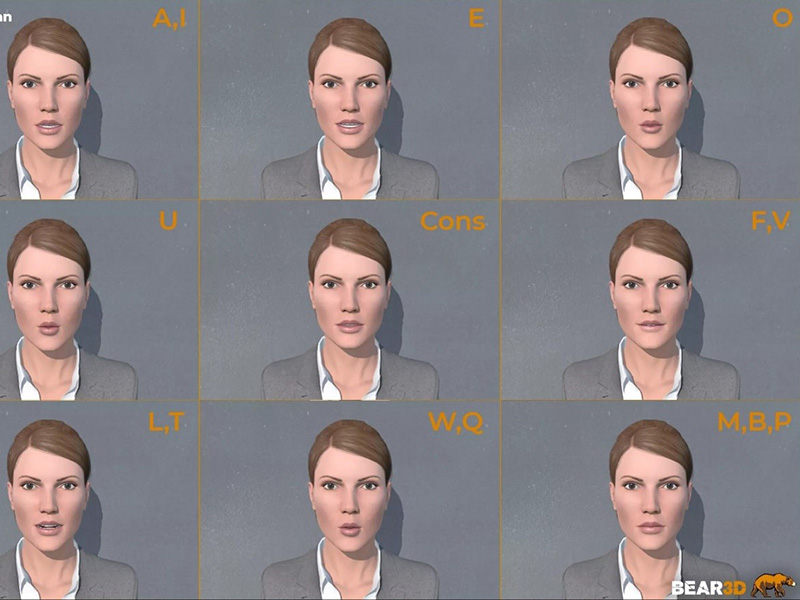
The platform is built around natural communication between the user and the digital interviewer. Through Speech-to-Text and Text-to-Speech technologies, users can speak naturally and receive immediate spoken responses from the avatar.
The interaction goes beyond simple question-and-answer exchanges. Powered by AI, the avatar actively conducts the interview by asking questions, requesting clarifications, adapting the flow of the conversation, and guiding the user in the same way a real interviewer would. This creates a realistic, two-way dialogue that closely simulates real-world communication scenarios.
In addition, voice-based interaction reduces usability barriers and enables individuals with diverse communication needs to participate actively and equally in the training process.
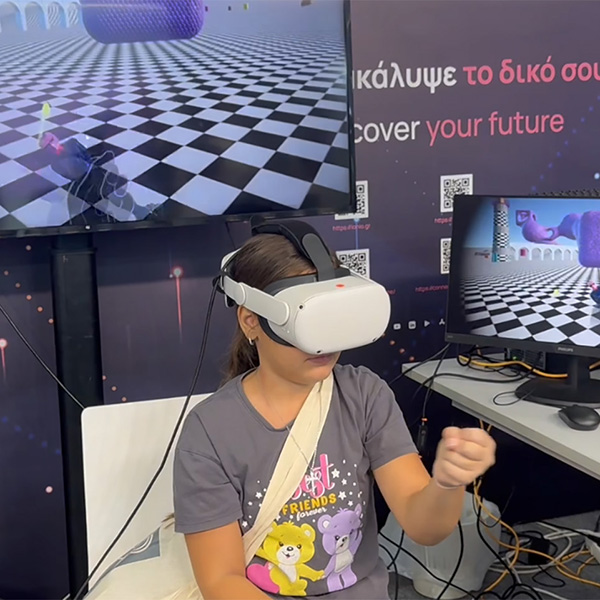
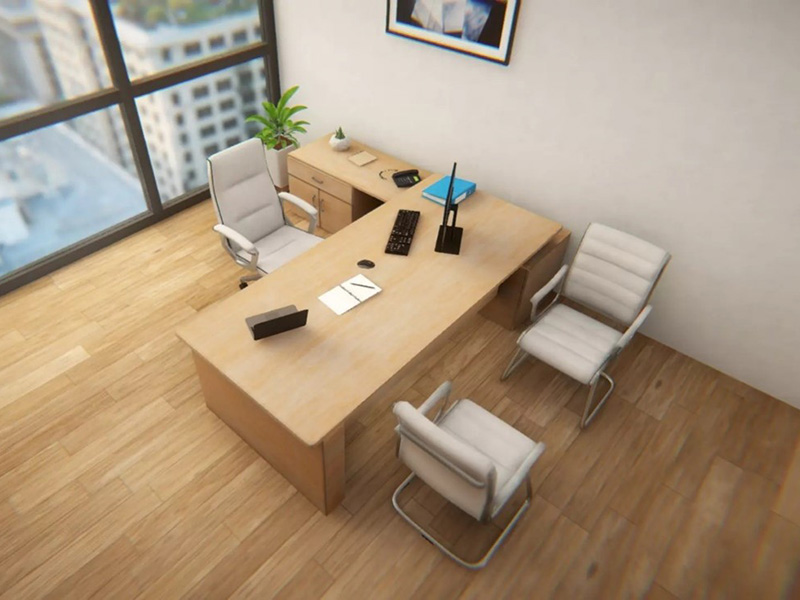
Developed in Unity, the platform utilizes Virtual Reality technologies to create a realistic interview setting. Users are placed in a modern professional office designed to replicate authentic job interview conditions.
Through VR equipment and natural interactions within the virtual environment, the experience becomes more immersive and effective, helping users become familiar with real-life social and professional situations.

The platform also provides tools for recording and evaluating user interactions. Analysis of conversations and user behavior during interview sessions generates valuable insights for educators and researchers, supporting the continuous improvement of training scenarios and the assessment of AI technologies in educational and therapeutic contexts.
These capabilities contribute to a deeper understanding of how immersive technologies can enhance learning outcomes and support social inclusion.
Αυτός ο ιστότοπος χρησιμοποιεί cookies
Χρησιμοποιούμε cookies για να εξατομικεύουμε το περιεχόμενο και τις διαφημίσεις, να παρέχουμε λειτουργίες κοινωνικών δικτύων και να αναλύουμε την επισκεψιμότητά μας. Επίσης, κοινοποιούμε πληροφορίες σχετικά με τη χρήση του ιστότοπού μας από εσάς στους συνεργάτες μας στα μέσα κοινωνικής δικτύωσης, στη διαφήμιση και στην ανάλυση δεδομένων, οι οποίοι ενδέχεται να τις συνδυάσουν με άλλες πληροφορίες που τους έχετε παράσχει ή που έχουν συλλέξει από τη χρήση των υπηρεσιών τους.
Τα cookies είναι μικρά αρχεία κειμένου που μπορούν να χρησιμοποιηθούν από ιστοσελίδες για να κάνουν την εμπειρία του χρήστη πιο αποδοτική.
Η νομοθεσία ορίζει ότι μπορούμε να αποθηκεύουμε cookies στη συσκευή σας μόνο εάν είναι απολύτως απαραίτητα για τη λειτουργία αυτού του ιστότοπου. Για όλους τους υπόλοιπους τύπους cookies χρειαζόμαστε τη συγκατάθεσή σας. Αυτό σημαίνει ότι τα cookies που κατηγοριοποιούνται ως απαραίτητα επεξεργάζονται βάσει του άρθρου 6 (1) (στ) του GDPR. Όλα τα υπόλοιπα cookies, δηλαδή αυτά των κατηγοριών προτιμήσεων και μάρκετινγκ, επεξεργάζονται βάσει του άρθρου 6 (1) (α) του GDPR.
Αυτός ο ιστότοπος χρησιμοποιεί διαφορετικούς τύπους cookies. Ορισμένα cookies τοποθετούνται από υπηρεσίες τρίτων που εμφανίζονται στις σελίδες μας.
Μπορείτε ανά πάσα στιγμή να αλλάξετε ή να ανακαλέσετε τη συγκατάθεσή σας από τη Δήλωση Cookies στον ιστότοπό μας.
Μάθετε περισσότερα για το ποιοι είμαστε, πώς μπορείτε να επικοινωνήσετε μαζί μας και πώς επεξεργαζόμαστε τα προσωπικά δεδομένα στην Πολιτική Απορρήτου μας.
Παρακαλούμε αναφέρετε το αναγνωριστικό συγκατάθεσής σας και την ημερομηνία όταν επικοινωνείτε μαζί μας σχετικά με τη συγκατάθεσή σας.

